5 Self-Help Books Worth Reading in 2026 (And 5 that aren’t)
Let’s face it- we’ve all had that one time when we did nothing all day and randomly got motivated to ‘change our life’ and ‘become somebody greater’, vowing to start a new, disciplined life tomorrow morning onwards.
Then we forget everything in the morning.
The will to transform and develop oneself for the better isn’t really that uncommon in general- but with the coming of social media sites and apps that are constantly begging for your attention and with the fast-paced nature of modern life, it’s quite hard to build discipline and become more focused on important goals.
The best way to actually start is actually quite simple- reading. Reading helps one gain valuable, actionable knowledge and develop skills like comprehension, vocabulary, patience and observation.
This is where the 'self-help genre of books' steps in. These generally refer to contemporary books that focus on self improvement and different aspects related to it. Most books have different contexts, situations and applicability but one can observe that a large proportion of books aim to appeal to most audiences.
Self-help books have grown exponentially in popularity in the past ten to fifteen years, with books like Atomic Habits and The 48 Laws of Power becoming household names.
It's no surprise that with a rise in popularity, along with good self-help reads, there is an overwhelming majority of overrated or cash-grab books. As a reader, it's more important than ever to know which books to spend your valuable time and money on.
Let's delve into a select collection of 10 self-help books- five which are most likely worth your time and five which are not so much- with of course, NO SPOILERS.
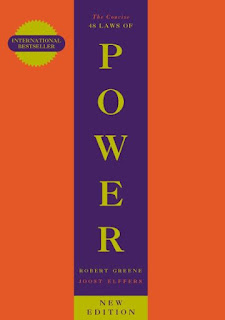
5: “The 48 Laws of Power” by Robert Greene

This book deals with the very structure and fabric of control and power, detailing into the past 3000 years of the history of power as we know it today, and serves as a manual for individuals who wish to wield power, learn when they are wielded by power, and those who want to deflect its influence on their lives.
These tactics are explained thoroughly via 48 individual laws, along with instances of violation of the law (Transgression), their effective use (Observation), analysis of these events (Interpretation) and their reversal.
This book is somewhat controversial as it also shows the readers how to use tactics like manipulation, betrayal and deceit. I believe this is because the book simply lays down rules that will be useful for an individual who wants to gain power and control in our modern world. Some may also feel that this book sets certain figures and their deeds as examples for the readers to follow in some of the cases in the book who are immoral people.
However, it would not be correct to say that “48 Laws of Power” promotes immoral practices as it just shows the truth behind the realm of power in a non biased manner, and it is a realistic image of the cutthroat competition one may face in society.
4: “The Psychology of Money” by Morgan Housel

The Psychology of Money is a book that talks about a side of money and investment that’s not just about numbers. This title is a guide on making smart financial decisions that help not just your bank account- but you as a person.
The book helps us understand why different people have different perspectives on money and investment and how a person’s background, upbringing, along with other factors affect their financial decisions in the long run.
Along with this, it also talks about what these decisions may be; they may be detrimental choices such as overspending, taking overwhelming risks, poor management of wealth, and choosing the extreme ends of financial decisions- along with solutions and precautions to prevent these mistakes.
NOTE THAT this is not an in-depth guide on the technicalities of investment and personal finance as such.
This book mainly revolves around the links between human psychology and finance, thus serving as a helpful book for investors and non-investors alike, appealing to enjoyers of psychology and finance books.
4: “Mindset” by Carol S. Dweck

2: “Thinking Fast and Slow” by Daniel Kahneman

In “Thinking Fast and Slow”, Daniel Kahneman shows the inner workings of our brain as an interplay of two separate systems of our brain; namely “System 1” and “System 2”.
We are introduced to two different decision making parts of our brain- system 1 and system 2. These are labelled as different types of decision-making processes of our brain, and it’s pretty easy to understand.
System 1 is a thinking system that operates automatically and quickly, with little to no effort and no sense of voluntary control. It’s used for shorter and instantaneous decisions. On the other hand, System 2 allocates attention to effortful mental abilities, such as large calculations, logical reasoning and critical thinking.
The book introduces us to this singular concept which, while simplified, is still very significant as the labels of system 1 and system 2 are widely used in psychology. It has been presented as a psychodrama between two characters.
Moreover, it shows us how these two systems work in real time using surveys and studies conducted by the author himself. Moreover, the book, especially in the first part, consists of a large number of simple but interesting activities.
READ A SPOILER FREE REIVEW OF THINKING FAST AND SLOW BY DANIEL KAHNEMAN
1: “Zero to One” by Peter Theil

Simply put, “Zero To One” by Peter Thiel is a book about how to create new and successful startups. It teaches about the importance of creating new technologies rather than copying or modifying existing ones- and how to actually do it.
It talks about the future of progress. According to Thiel, there are two kinds of progression; first is “vertical” progress, or technological development, and second is “horizontal” progress, which represents bringing changes to existing technology or the spread of existing technology.
This has been represented visually in the book for ease. Take a look at the graph below, it’s quite possible that you’ve already seen it or a variation of it somewhere online.

In my view, this book was quite straightforward and honest, going through the basics of what makes a startup good and what ultimately makes one dominate the market. The book is barely around 200 pages long, and it somehow manages to wrap up a lot of topics properly within that constraint, which, quite frankly, a considerable number of popular self-help and finance books may not even completely encompass in 300-400 page books.
5: “Laws of Human Nature” by Robert Greene

“The Laws of Human Nature” dives into the inner workings of our brain and how our upbringing and personality determine our long term decisions.
It explores the functioning of our human psyches and how our experience, especially in childhood affects our personality and thinking processes; especially in the context of emotions such as envy, greed and pride.
It uses numerous historical incidents to show us how emotions affect actions and the importance of being rational and introspective of oneself. Moreover, it’s about using these lessons to understand your shortcomings and flaws and hence become more in touch with reality, being able to control when and how you react to situations.
4: “Grit” by Angela Duckworth

“Grit”, in simple words, is the idea that your hard work and perseverance matter exponentially more than your talent in the long run.
The book explains that combination of passion and perseverance over long periods of time matters more than raw talent. According to Duckworth, highly successful people are not always the smartest or most gifted. Instead, they continue working toward goals even when progress is slow, boring, or difficult.
The book challenges the popular belief that talent alone guarantees achievement. Duckworth explains that effort is just as important because talent without discipline often goes unused. Someone moderately talented but extremely determined may outperform someone naturally brilliant who gives up easily.
“Grit” has been marketed as something novel and never-seen-before. However, at its very core it's genuinely just a blend of discipline, resilience and conscientiousness. And that’s the main conceptual problem with this book. The concept of “Grit” is actually good old determination, passion and willpower, which is honestly just common sense.

In a nutshell, “Good Leaders Ask Great Questions” approaches the art of leadership through introspection.
Maxwell argues that leadership is not simply about having expertise, it is about understanding people, learning continuously and creating and environment where others can contribute their ideas.
The book also examines how questions can encourage critical thinking, develop future leaders, and improve quality of decisions within teams and organisations. The book explores how questions can improve one’s communication, strengthen relationships, and help leaders gain valuable insights.

As I flipped through the pages, I felt that the book attempted to deal with most problems only using “Let Them”, which is quite a good way to release negativity, but there are some situations where you can’t just “Let Them”.
“The Let Them Theory” does attempt to find solutions in some places, but I feel that the approach isn’t as effective and assertive as it needs to be in such problems. The book really tries to connect “Let Them” to a solution, but to be fair, it just didn’t add up right.

The ideas themselves are very simple, and even with several varying examples in each one, it really felt that the book could have been much shorter without actually compromising on the content.
It just seems really stretched out at times, and it also affected the quality of the content in most places, making it overcomplicated and confusing. There is always a short summary at the end of each chapter, and there are also tables in some, and they really put into perespective how concise the entire book could have been.
In my personal experience, to be frank, I have genuinely seen 10 minute YouTube videos that are more informative. As previously mentioned, the chapter summaries are all that you need to read to actually understand what the author wishes to convey, and that's barely half a page in most cases.
That brings me to my second criticism- the content is written in a way that makes it extremely complex
All across Atomic Habits, there are several charts and graphs that are meant to quantify or visualise habits. I see why James Clear felt a need for there to be visual aids to summarise information, but honestly, it just doesn’t make any sense.

Here is a graph from the introduction chapter. It’s quite a famous graph (you may have seen it somewhere online as well) .
Context: Author is explaining how gradual improvement makes you better over time and how bad habits gradually harm you.
If you look at it for a while, you’ll notice that there are A LOT of things in this graph do not really make any sense.
These graphs and charts just make ideas more complicated sometimes, and I personally think that the content itself, along with the chapter summaries, makes things easy enough to understand these ideas.


Comments
Post a Comment